
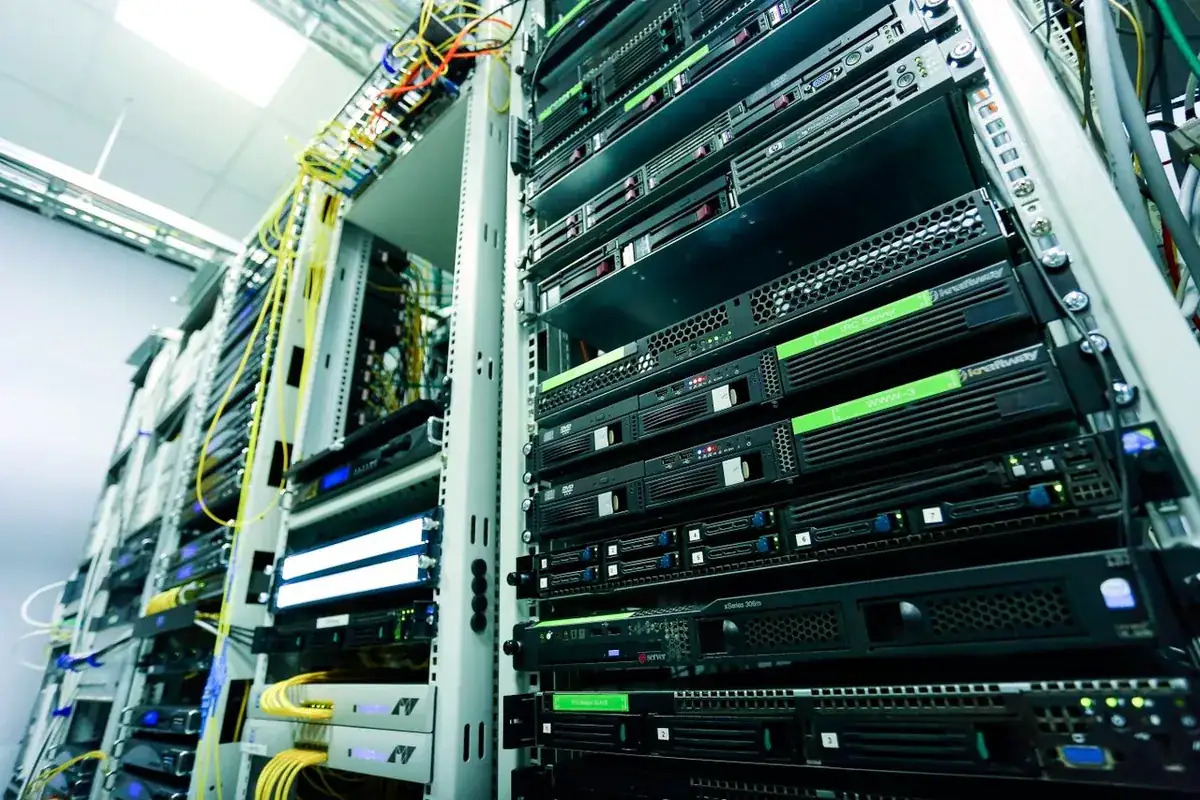
A new report argues that the electronic waste generated by the AI datacenter boom will be far larger than previously estimated, potentially enough to fill a line of shipping containers stretching around Earth’s circumference six times by 2050.
The report, titled How Big Is the AI Waste Wave?, comes from the Basel Action Network (BAN), a nonprofit named after the Basel Convention that governs international movement of hazardous waste. BAN says prior academic projections focused almost entirely on servers and GPUs, which make up just 13 percent of a datacenter’s equipment by weight. Once power distribution, backup power systems, cooling, and networking gear are factored in, the report estimates the true waste total could be 40 to 60 times higher than commonly cited figures.
Not Just GPUs
BAN’s model breaks datacenter equipment into five categories: networking, power distribution, backup power, servers plus accelerators, and cooling. Combined, these add up to roughly 7,000 metric tons for a reference 100 MW AI facility, much of which will need replacing as facilities are upgraded.
A key driver is the shift from racks drawing 5 to 15 kW to the 50 to 140 kW racks required for AI workloads, which forces much of a facility’s power infrastructure to be ripped out. The report notes a single 100 MW facility contains about 2,700 tonnes of copper in cabling and busbars alone.
Replacement cycles vary by equipment type in the model: GPUs and accelerators every two to three years (versus five to seven years for general-purpose servers), networking infrastructure every three to four years, power distribution every eight years, and both backup power and cooling every five years. BAN assumes hyperscalers typically replace entire preconfigured server systems when upgrading GPUs rather than swapping components.
The Bottom Line
Overall, BAN estimates AI infrastructure will generate between 395 million and 617 million tonnes of e-waste from 2025 to 2050, enough to fill 15 million to 23 million shipping containers. Lined up end to end, 20 million containers would stretch about 244,000 km, roughly six times Earth’s circumference.
The report notes that no hyperscaler, government, or international body has published a plan for handling e-waste at this projected scale, and that current infrastructure is already insufficient to safely process existing volumes.
BAN founder Jim Puckett said the environmental debate around AI has focused on electricity, carbon, and water while largely ignoring what happens to the hardware itself. This is the first of four planned reports; future installments will examine reuse and refurbishment options, the toxicity of the waste including PFAS contamination, and potential mitigation strategies.